
Estrella Village Lawn Mowing Services
Choose our lawn mowing service for reliable, professional care that keeps your yard healthy, beautiful, and hassle-free all season long.
Get a Free QuoteOur Estrella Village Landscaping & Yard Care Services
When to Schedule Lawn Mowing in Estrella Village, Arizona – Seasonal Guide
In Estrella Village, Arizona, timing your lawn mowing is crucial for maintaining a healthy, vibrant yard throughout the year. The region’s unique desert climate, characterized by hot summers, mild winters, and sporadic rainfall, means that grass growth patterns differ from other parts of the country. Typically, the optimal mowing season begins in early March, after the last frost, and extends through late October, when temperatures start to cool. Neighborhoods near Estrella Mountain Regional Park and along Lower Buckeye Road often experience microclimates, with shaded areas requiring slightly different care than sun-exposed lawns.
Local environmental factors such as drought risk, soil composition (often sandy or clay-heavy), and humidity levels play a significant role in determining mowing frequency. For example, areas with dense shade from mature mesquite or palo verde trees, like those found near the Estrella Village Community Center, may need less frequent mowing due to slower grass growth. Additionally, municipal guidelines and water restrictions, which can be found on the official city website, should always be considered when planning your lawn care schedule.
Local Factors to Consider for Lawn Mowing in Estrella Village
- Tree density and shade coverage (affects grass growth rate)
- Soil type (sandy vs. clay-heavy soils impact moisture retention)
- Seasonal precipitation and drought risk
- Proximity to landmarks like Estrella Mountain Regional Park
- Municipal restrictions on watering and mowing times
- Terrain variations (flat vs. sloped lawns)
- Frost dates and temperature fluctuations
Benefits of Lawn Mowing in Estrella Village
Consistent Curb Appeal
Healthier Grass Growth
Weed and Pest Reduction
Time and Effort Savings
Professional Equipment Use
Reliable Scheduling
Estrella Village Lawn Mowing Types

Standard Lawn Mowing
-
Mulching Mower Service
-
Bagging and Clipping Removal
-
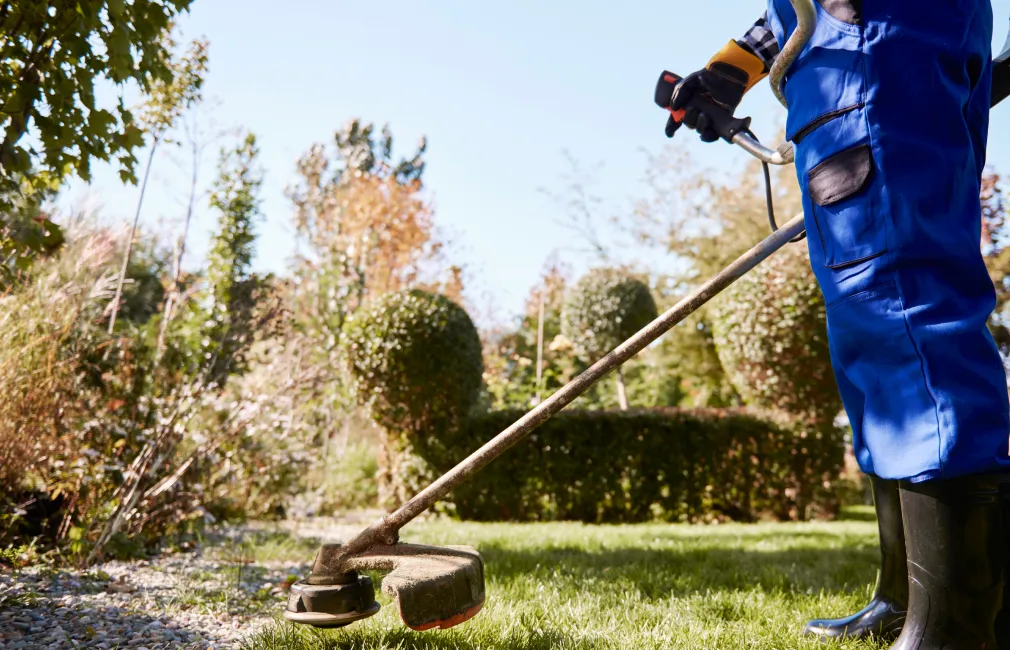
Edging and Trimming
-
Seasonal Lawn Scalping
-
Commercial Property Mowing
-
Eco-Friendly Electric Mowing
Our Lawn Mowing Process
Site Evaluation
Lawn Preparation
Mowing Execution
Edging and Trimming
Cleanup
Why Choose Estrella Village Landscape Services

-
Estrella Village Homeowners Trust Us
-
Expert Lawn Maintenance
-
Reliable Irrigation Solutions
-
Competitive Pricing
-
Professional Team
-
Satisfaction Guarantee
-
Personalized Service
Coordinating Lawn Mowing Services with Estrella Village's Municipal Programs and Departments
Estrella Village is one of the designated urban villages within the City of Phoenix, and lawn mowing operations in this area fall under Phoenix's citywide municipal framework for landscape maintenance, green waste handling, and stormwater protection. Residents and property managers should coordinate grass clipping disposal through the city's bulk trash and green waste collection programs administered by the Phoenix Public Works Department. Key coordination points include:
- Grass clippings left on curbs or blown into streets can migrate into storm drain inlets during monsoon events; all mowing debris must be contained on-site or properly bagged for collection
- Properties adjacent to public rights-of-way should verify frontage maintenance expectations through the Phoenix Estrella Village Planning office
- Commercial mowing operators generating large volumes of clippings should confirm disposal routing with the city rather than depositing material in residential collection bins
Phoenix Public Works Department
200 W. Washington St., Phoenix, AZ 85003
Official Website: Phoenix Public Works Department
How Estrella Village's Low-Desert Heat and Alkaline Soils Affect Lawn Mowing
Estrella Village sits in the Phoenix metro low desert, classified within USDA Hardiness Zone 10a, where summer air temperatures routinely exceed 110°F and surface temperatures on exposed turf can climb even higher. These conditions directly shape how lawn mowing must be approached. The predominant soils across much of southwestern Phoenix tend toward alkaline sandy loam and caliche-influenced profiles, which affect root depth, irrigation penetration, and turf resilience between mowings. According to the USDA Web Soil Survey, many subdivision lots in this area contain compacted fill material imported during development, further limiting water infiltration.
- Reflected heat from block walls, concrete driveways, and decomposed granite borders intensifies turf stress along property edges, causing uneven growth patterns that require adjusted mowing lines
- Bermudagrass, the dominant warm-season turf in Estrella Village, grows aggressively from April through September and may require weekly or biweekly mowing during peak months
- Winter overseeded ryegrass demands a different mowing height and frequency from October through March, with transition periods requiring careful scalping and height management
- Irrigation timing must be coordinated with mowing schedules; mowing saturated turf causes rut damage and clumping, while mowing drought-stressed turf risks crown injury
The Arizona Department of Water Resources provides landscaping guidance that emphasizes efficient irrigation practices directly relevant to maintaining mowable turf in water-restricted desert communities.
Estrella Village Lawn Mowing Compliance with Phoenix Codes and Stormwater Regulations
Lawn mowing in Estrella Village does not typically require a permit, but several regulatory frameworks apply to how the work is performed and how byproducts are managed. Phoenix's municipal code includes property maintenance standards that can trigger code enforcement action if turf is allowed to grow excessively or if clippings and debris accumulate on sidewalks, streets, or neighboring properties.
- Grass clippings, leaf litter, and organic debris must not enter storm drains, washes, or retention basins; this is governed by Phoenix's Phase II MS4 stormwater program under the Clean Water Act and enforced through Arizona DEQ stormwater requirements
- Any herbicide or pesticide application performed in conjunction with mowing—such as post-mow weed treatment—requires proper licensing through the Arizona Department of Agriculture
- Noise from commercial mowing equipment is subject to Phoenix's noise ordinance; operators should verify current allowable hours for power equipment use in residential zones
Phoenix Office of Environmental Programs
200 W. Washington St., Phoenix, AZ 85003
Official Website: Phoenix Office of Environmental Programs
Property managers overseeing multi-family or HOA-governed parcels in Estrella Village should also confirm any community-specific landscape maintenance standards through their association's CC&Rs, as these may impose mowing frequency or height requirements beyond city minimums.
Timing and Methods for Professional Lawn Mowing in Estrella Village's Climate
Proper mowing technique in Estrella Village must account for extreme heat stress, rapid bermudagrass growth cycles, and the seasonal transition between warm-season and cool-season turf. The University of Arizona Cooperative Extension and its Turfgrass Maintenance Guide provide regionally calibrated guidance for low-elevation Arizona lawns.
- Bermudagrass mowing height should generally be maintained between 1 and 2 inches during active summer growth; cutting below this range increases scalping risk and heat damage
- Overseeded ryegrass during winter months is typically maintained at 2 to 3 inches, with mowing frequency reduced as growth slows in cooler temperatures
- Mowing should occur in early morning hours when turf is not heat-stressed, ideally after irrigation has been absorbed but before midday temperatures peak
- Sharp mower blades are essential in desert conditions; dull blades tear grass tips, creating brown edges that worsen under intense UV exposure and dry air
- Clipping management follows the one-third rule—never remove more than one-third of the blade height in a single mowing—to avoid shocking turf already under heat and water stress
- During the spring transition (typically March through April), bermudagrass emerges from dormancy and overseeded rye begins to decline; mowing height adjustments and gradual scalping help facilitate this changeover
Phoenix Water Services Department
200 W. Washington St., Phoenix, AZ 85003
Official Website: Phoenix Water Services Department
What Neighborhoods Do We Serve Throughout Estrella Village, AZ?
- Laveen — Large residential lots with irrigated bermudagrass lawns are common in newer subdivisions, often requiring frequent summer mowing due to full sun exposure and minimal shade from young trees
- Estrella Mountain Ranch — Master-planned community with HOA-maintained common areas and individual homeowner turf parcels; mowing schedules often need to align with association landscape standards and shared irrigation infrastructure
- South Mountain Foothills — Properties near the mountain preserve may have sloped lots with limited turf areas, where mowing requires attention to grade changes and runoff direction toward retention basins
- Baseline Corridor neighborhoods — Older residential areas along Baseline Road feature mature landscaping with established bermudagrass lawns that may have compacted soils and aging irrigation systems affecting mowing conditions
- Sierra Estrella area — Homes in proximity to the Sierra Estrella range often sit on alkaline desert soils with caliche layers, requiring careful irrigation coordination to maintain mowable turf density